Showing: 1 - 5 of 5 RESULTS
Health Notes 健康資訊

Keep Calm and disinfect your place!

Though the social distancing policy is not relaxing in the current period, we should keep calm and disinfect our places!

Apart from keeping your hands clean, now we want to remind everyone to keep your place disinfect!  

Everyone knows that using water to clean your place is good enough to remove most of the germs and dust away from your place. However, during the pandemic, we definitely would also encourage everyone to disinfect your place thoroughly using diluted bleach which removes up to 99.9% of pathogens (especially the virus like Covid-19 and contact-borne bacteria like C. difficile.)!

1:99 diluted bleach could be used for general household cleaning
1:49 diluted bleach could be used to disinfect the contaminated objects and environment (contaminated with vomit, excrement, secretions or blood, etc)  

Bear in mind that bleach should be used after dilution. If not, the sewer will be hurt by the pure/high concentration bleach! 

**  Keep calm and keep your place disinfected!  **

** Eliminate the possibility of infection **

Let’s fight the disease!

#micromag #micromaghealthcare #handwashing #disinfect #hygienicenvironment #cleanyourplace #disinfectyourhome #bleach #hygienicenvironment #disinfectyourplace #householdbleach #keepcalm #handwash #bleach #disinfectwithbleach #notrelaxingsocialdistancingpolicy #keepyourplaceclean #keepyourhomeclean #staysafe #stayhealthy #prayforhongkong
Health Notes 健康資訊

E. coli (Escherichia coli) is our partner

You are safe with non-pathogenic E. coli
— be aware of food safety and your hands to prevent pathogenic E. coli

The well-known bacteria Escherichia coli (abbr. E. coli) is also one of the bacteria that could be found in the digestive tract microbiome of humans and animals. Most E. coli not only do no harm to our body but also help to synthesize vitamin K and the development of the immune system. When the harmful germs are present in the colon, E. coli would protect their own spaces and fight against the harmful germs to maintain the balance of our microbiome in the colon. There are a few kinds of Escherichia coli strains outside the human colon that are pathogenic that cause illnesses like watery diarrhea and abdominal pain; some even would enter the bloodstream which causes hemolytic anemia, acute renal failure, and even death

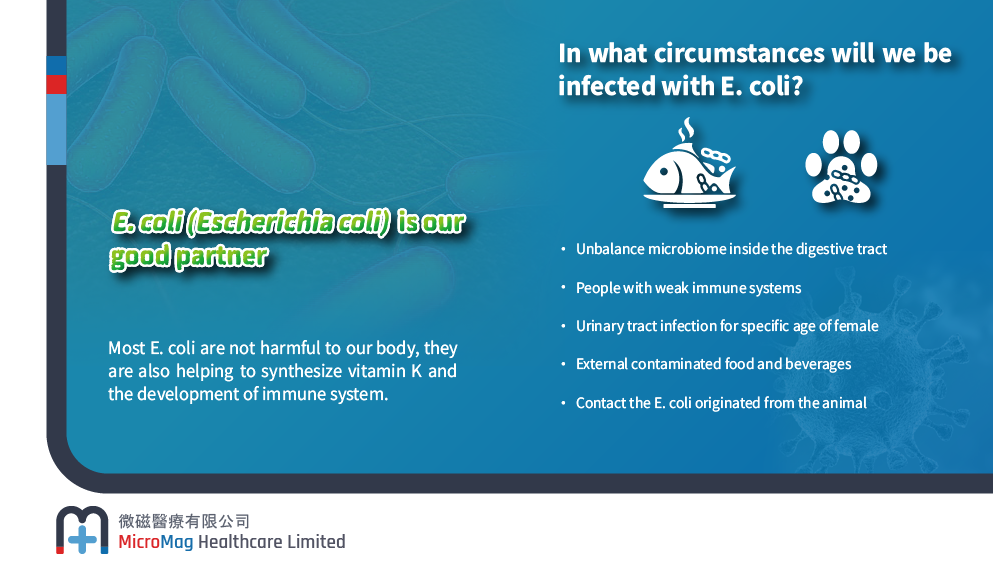
In what circumstances will we be infected with E. coli?

    • Unbalance microbiome inside the digestive tract

People who have an unbalanced microbiome within the colon due to the application of antibiotics, chemotherapy, unscheduled meal time, unbalance nutrition intake, etc. would weaken the immune system. 

When there are not enough E. coli, C. difficile will grab the chance to be dominant in our tract and make us sick

    • People with weak immune systems

Infants that have not yet established a strong immune system, and people who are chronically ill like cancer patients whose immune system has been weakened due to illness and treatment would have higher chances to be infected.

    • Urinary tract infection for specific age of female

Girls in the age of 10 and ladies in the age of 20-40 would have higher chances to get an external infection by the urinary tract.

    • External contaminated food and beverages

Food and beverages that are unwashed or uncooked which are contaminated with E. coli from the environment can make us sick.

    • Contact the E. coli from the animal

When we have contacted the E. coli originated from animals would also cause illness as well.

There are still ways to prevent infection of pathogenic E. coli

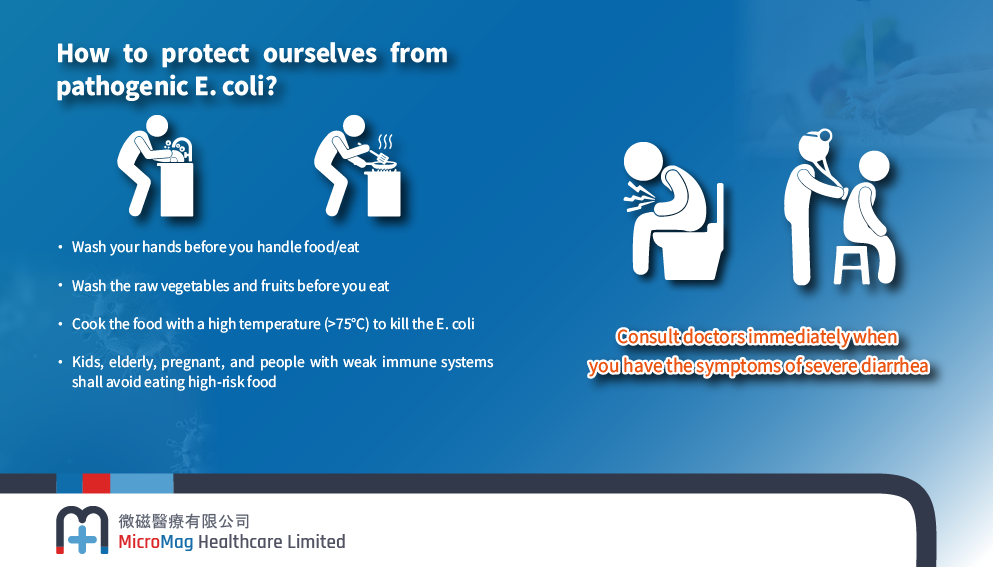
How to protect ourselves from pathogenic E. coli

    • Wash the raw vegetables and fruits before you eat
To keep the environment bacterium-free, chlorine bleach and other natural disinfection ways are recommended to reduce the risk of infection within the same environment. Hand hygiene is always the first move to prevent infectious diseases.
    • Cook the food with a high temperature (>75°C) to kill the E. coli
Use antibiotics only under the doctor’s prescription, and follow the whole treatment prescribed by doctor.
    • people with weak immune systems shall avoid eating high-risk food
Kids, elderly, pregnant, and people with weak immune systems shall avoid eating high-risk food: Unpasteurized milk, cheese, prepared or stored salads, and cold meats C. diff.

** We are infected by E. coli only when it is no longer staying in their own digestive tract **

** Wash your hands with (liquid) soap and running water! **

Let’s fight the disease!

#micromag #micromaghealthcare #infectiousdiseases #antibiotics #Escherichiacoli #E.coli #Gastrointestinaldisease  #antibioticsresistent #diarrhea #severediarrhea #waterydiarrhea #balancemicrobiome #dominant #toxin  #handwashing #followprescription  #stayhealthy #QuickCAS #enhancetheworldwithadvancedtech #instantsensinginasnap

Health Notes 健康資訊

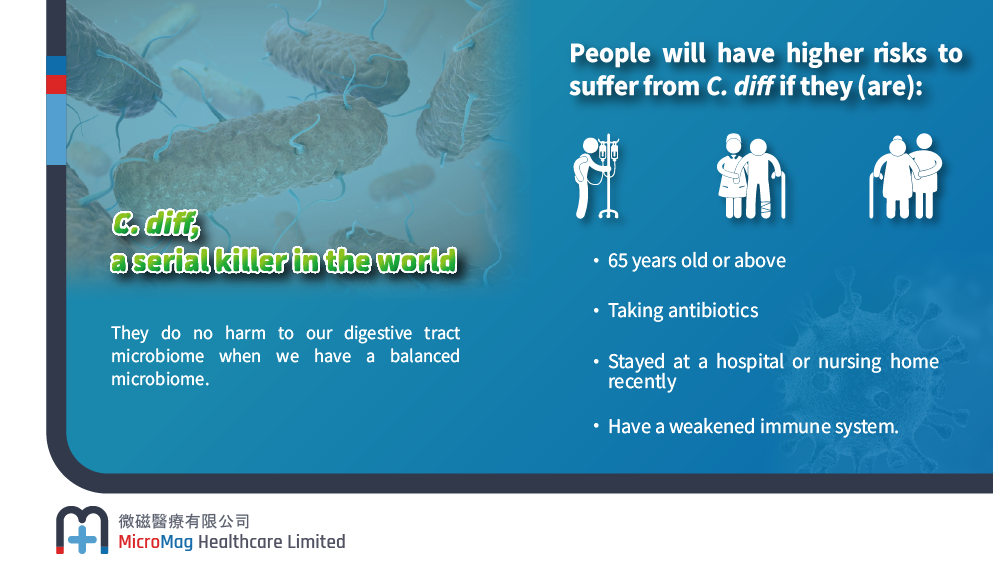
C. diff, a serial killer in the world

The antibiotic resistance-related bacteria fight back
— only take the antibiotics with prescriptions!

There is a strong bacterium that can kill millions of patients worldwide. It is normal to find them in our digestive tract microbiome and it does no harm when we have a healthy belly. It is named Clostridioides difficile (or Clostridium difficile in the past; or C. diff in short.). C. diff loves an anoxic environment, where the colon is one of the best living places. However, it is commonly found in the environment as well. When there are not enough good bacteria in your digestive tract microbiome, you will suffer from its toxins as it becomes a dominant bacteria in the colon to produce toxins harming our health.
Not everyone is easy to be infected by C. diff, but people will have higher risks to suffer from C. diff if they (are):
  • 65 years old or above
  • taking antibiotics
  • This may kill the good bacterium in your digestive tract microbiome. Make sure you take in accordance with doctors prescription.

  • stayed at a hospital or nursing home recently
  • Where germs are easily found in the environment. Keep personal hygiene.

  • have a weakened immune system
  • due to certain diseases such as HIV/AIDS, cancer, etc. which would hard to keep the health gate safe.

Diarrhea caused by C. diff is infectious especially in hospital and healthcare-associated places. There are over 200,000 estimated cases every year and 12,800 deaths in the United States (2017). In Hong Kong, there are more than 20,000 suspected cases and 2,000-3,000 reported cases annually since 2017 and mostly occurred in hospitals. As the inpatient number in Hong Kong is high, it is important to be aware of the prevention to reduce the risk of group outbreaks.

There are still ways to prevent infection of C. difficile

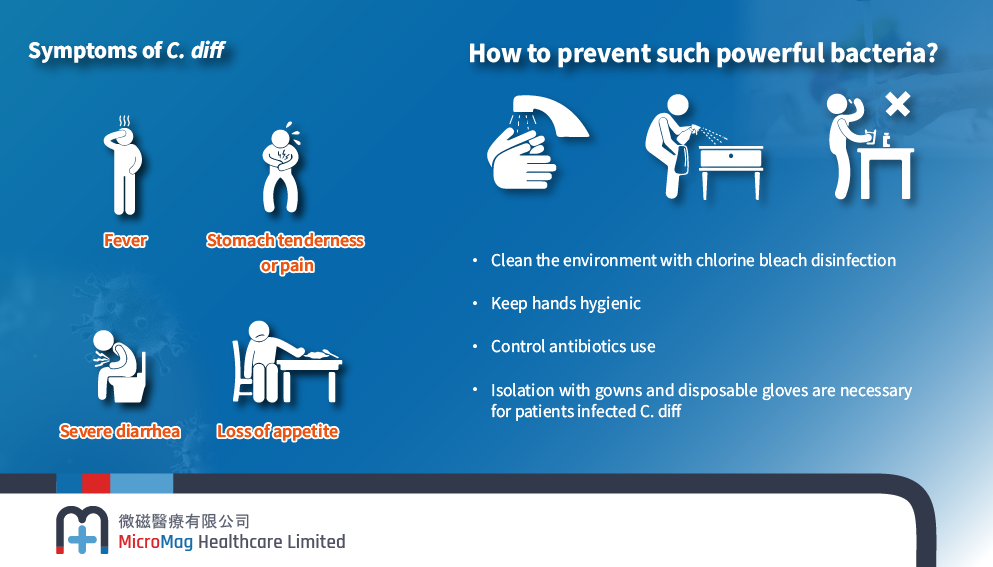
Prevention of suffering from C. difficile

  • Keep a hygienic environment with chlorine bleach disinfection
  • To keep the environment bacterium-free, chlorine bleach and other natural disinfection ways are recommended to reduce the risk of infection within the same environment.

  • Keep your hands hygienic
  • Hand hygiene is always the first move to prevent infectious diseases.

  • Control antibiotics use
  • Use antibiotics only under the doctor’s prescription, and follow the whole treatment prescribed by doctor.

  • Patients infected by C. diff should be isolated.
  • Isolation gowns and disposable gloves are necessary for hospital staff and visitors to prevent the spread and infection of C. diff.

** C. diff spores could not be killed by alcohol-based hand sanitizers!! **

** Wash your hands with (liquid) soap and running water! **


Let’s fight the disease!

#micromag #micromaghealthcare #infectiousdiseases #Clostridioidesdifficile #Clostridiumdifficile #cdifficile #Gastrointestinaldisease #antibiotics #antibioticsresistent #diarrhea #severediarrhea #fever #lossappetite  #balancemicrobiome #dominant #toxin  #handwashing #followprescription  #stayhealthy #QuickCAS #enhancetheworldwithadvancedtech #instantsensinginasnap

Health Notes 健康資訊

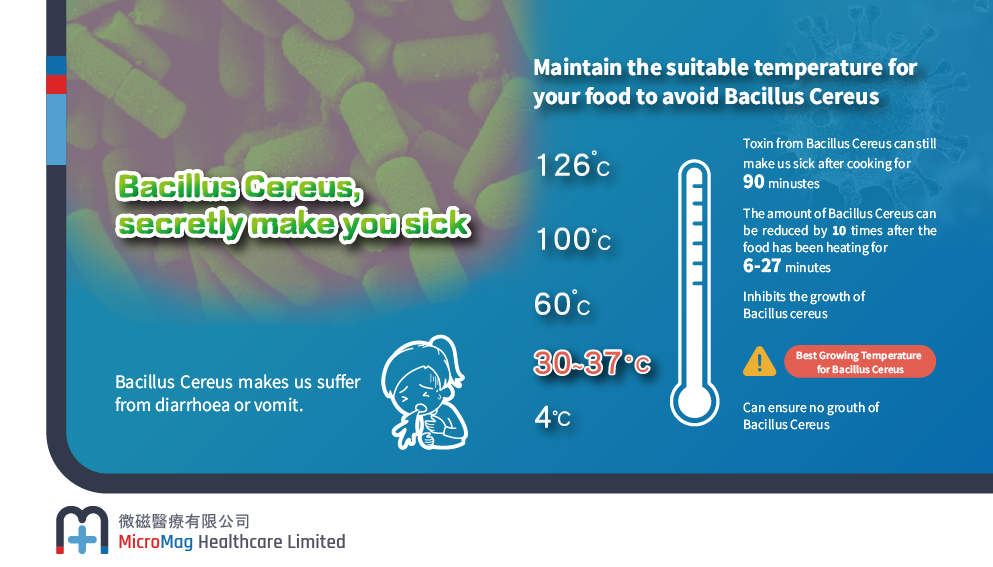
Bacillus cereus, secretly make you sick.

A bacteria look like cereus can make us vomit even the food is well-cooked
— Maintain the right temperature for your food!

There is a mysterious tough toxin that can survive at 126°C up to 90 minutes produced by a bacteria named Bacillus cereus. It might be surprising that there is something that high temperature cannot help at once. Bacillus cereus is a bacterium that looks like cereus, and most cases are caused by fried rice, so it is also named as “Fried Rice Syndrome”. But fried rice is already cooked at a high temperature! This act does not clear such bacteria in contaminated food.
Bacillus cereus can produce an emetic toxin that causes Gastrointestinal disease which makes us either suffer from diarrhea or vomit. Such tenacious bacteria can survive in food up to 60°C! Its toxin still could poison the food and make us suffer when the temperature is 126°C! It will only lose its toxic power after 90 minutes.

There are still ways to prevent infection of Bacillus Cereus

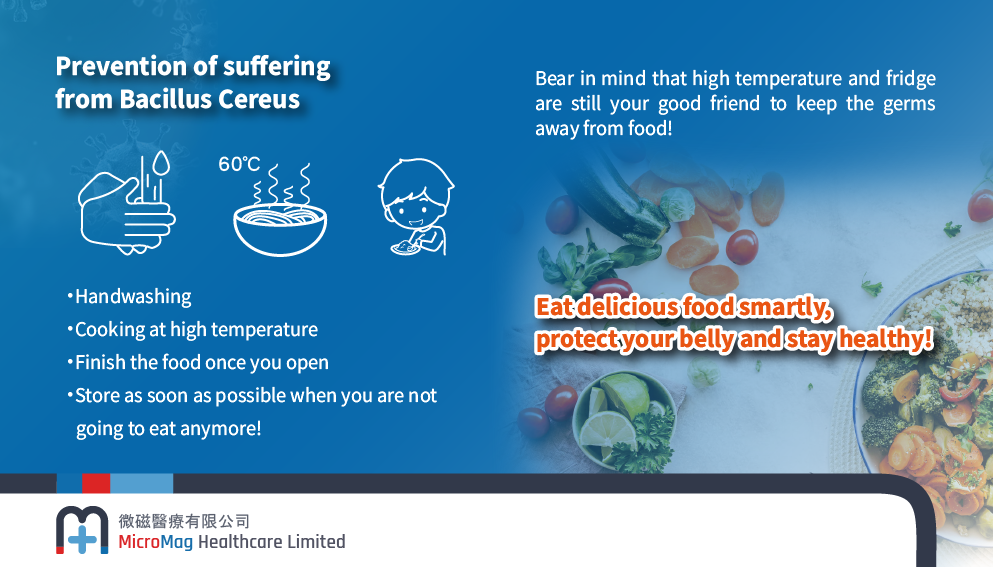
Prevention of suffering from Bacillus Cereus

    • Handwashing

Hygienic hands are always a good move for the prevention of infectious diseases. Here we shall wash our hands before we handle the food and before we eat. About the hand washing, you can refer to here.

    • Cooking at high temperature

Cooking food at high temperature is always good to kill most of the germs and disable the toxin.

    • Finish the food once you open

Finish your food when they are still fresh and warm and right after the cooking procedure in the best-tasting state.

    • Store as soon as possible when you are not going to eat anymore!

Put the food in the fridge or seal up the food when you are done with your meal but there are still some leftover food.

Eat delicious food smartly, protect your belly and stay healthy!

#micromag #micromaghealthcare #infectiousdiseases # BacillusCereus # FriedRiceSyndrome #bacterialooklikecereus #cereus # Gastrointestinaldisease #GIdisease #belly #diarrhea #vomit #throwup #foodpoisoning #freezetheuneatfood #foodsafety #foodstorage #handwashing #fridge #eatsmart #storesmart #protectyourbelly #stayhealthy #QuickCAS #enhancetheworldwithadvancedtech #instantsensinginasnap

Health Notes 健康資訊

Handwashing as the First Move

Washing hands frequently bring away most of the germs
— The scientific proof of handwashing in disease prevention

Handwashing is an effective first move in communicable disease prevention!

Early as 1807, an Italian Doctor Guiseppe Alessandro Giannini (1774-1818) introduced isolation, sanitization and handwashing to stop the spread of typhus exanthematicus. This has greatly inspired the way of preventing infectious disease worldwide.

So why does handwashing is effective for infectious disease prevention?

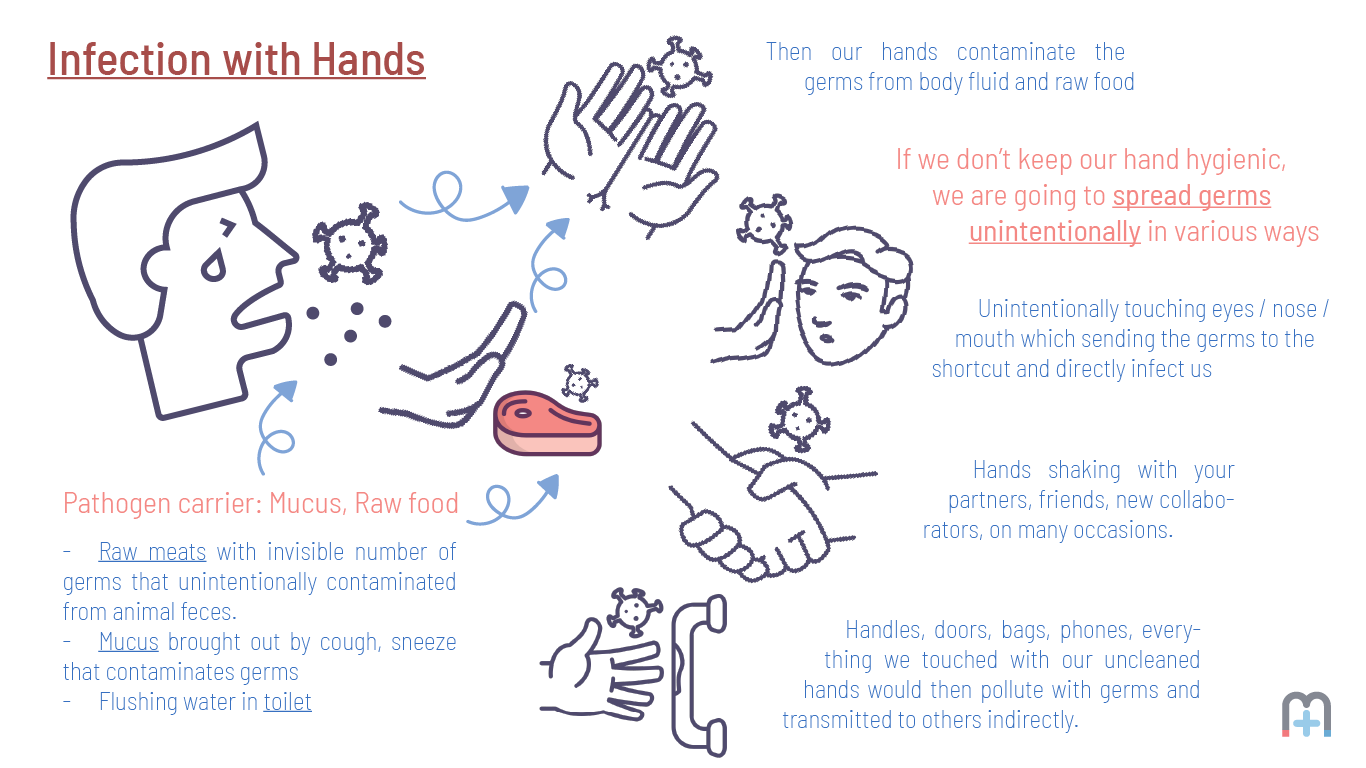
According to the Centre for Disease Control and Prevention, feces is one of the main sources of germs, which includes germs causing GI illness like Salmonella, E. coli O157, and norovirus; and the germs infected and spread through the respiratory system like adenovirus and hand-foot-mouth disease. Usually, those germs could go to hands right after toilet or change a diaper for baby; or from raw meats; or touch the objects that others contacted after cough and sneezed. Please DON’ T underestimate the germs! There are 1 trillion in a 1g of human feces!

Then how does it related to washing hands?

We often unconsciously touch our eyes, nose, and mouth. If we do not wash our hands to keep them clean, we are letting them go into our bodies to infect us! If we do not wash our hands before we consume any food, we will easily get sick from the mouth! If we do not wash our hands, we will easily spread the germs around the environment to infect other people! So, washing hands to keep our hands hygienic and wash away the pathogen is an effective move for preventing communicable disease!

When to Clean your dear Hands?

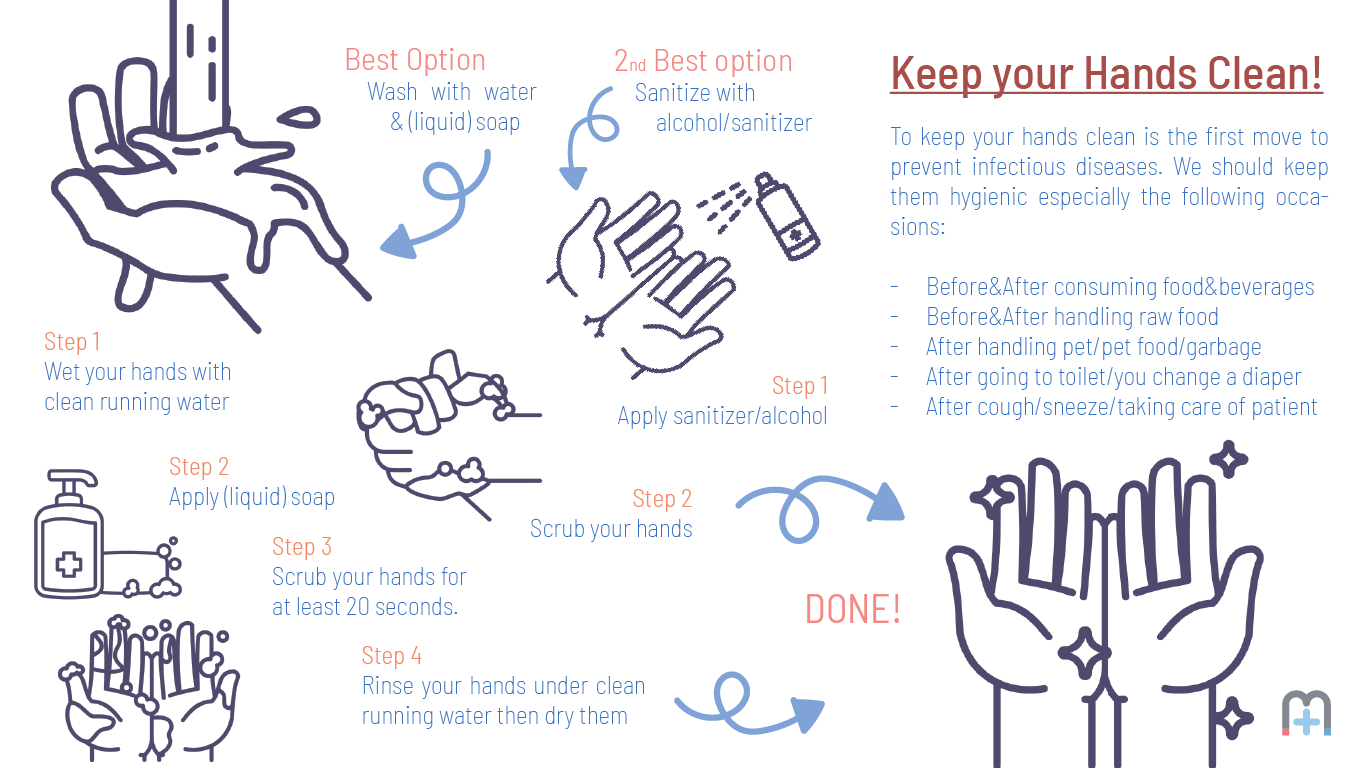
To keep your hands clean is the first move to prevent infectious diseases. We should keep them hygienic especially on the following occasions:

  • Before & After handling raw food
  • Before & After consuming food & beverages
  • After handling pet/pet food/garbage
  • After going to the toilet/you change a diaper
  • After cough/sneeze and taking care of the patient
  • The right way of cleaning your hands

    The best option to wash away the germs is to wash with running water and (liquid) soap.

    Step 1
    To begin, you need to wet your hands with clean running water first

    Step 2
    Then, you can apply either liquified or simply soap.

    Step 3
    You shall scrub your hands thoroughly with the applied soap: nails, fingers, finger gaps, palm, back of your hands for at least 20 sec

    Step 4
    Finally, rinse your hands under clean running water then dry them with tissue/towel/hand dryer

    The 2nd best option to wash away the germs is to wash with sanitizer and alcohol.

    Step 1
    You may apply either alcohol and sanitizer on your hands

    Step 2
    Then, you scrub your hands.

    Have you washed your hands today?

    #scheduledhandwashing #infectiousdisease #diseaseprevention #washyourhands #handwash #washhands #haveyouwashedhands